Lawrenceville's Due Diligence Clock Runs the Same for Every Buyer. The House Doesn't.
August 27, 2026
August 27, 2026
Two buyers signed contracts on Lawrenceville homes the same week this spring. Both got a standard ten-day due diligence period. Both hired inspectors. One buyer walked into closing with zero surprises. The other found out three days before closing that the home's supply lines were the original 1988 plumbing, installed during the exact decade the material is now known to fail, and had to scramble for a repipe quote before the window closed.
Same clock. Same contract language. Completely different houses.
That is the piece of the process most generic due diligence guides skip. They will tell you the window is negotiable, usually somewhere between seven and fourteen days, and that it starts on the Binding Agreement Date under the GAR F201 contract. All true. What they will not tell you is that in Lawrenceville, the right way to spend that window depends heavily on which decade built the house you are buying. The city's housing stock isn't one market. It's three, stacked on top of each other by build year, and each one has its own predictable failure points.
Georgia is a caveat emptor state. Sellers only have to disclose defects a buyer couldn't reasonably find on their own, and the standard property disclosure form, F301 for an owner-occupant seller, is customary rather than legally required. The real protection buyers get is the due diligence period itself, a contractually defined window during which you can walk away for any reason and get your earnest money back. Once it closes, you're bound to the deal except for whatever financing or appraisal contingencies remain in the contract.
That makes the window the only real leverage a buyer has, and it's short. Spending it on a generic inspection checklist instead of one built around the house's actual age is how buyers lose that leverage without realizing it.
Lawrenceville spans four zip codes, 30043 through 30046, and the build eras inside them are distinct enough that an inspector working this market treats them as three separate problems.
As the county seat and one of the older cities in metro Atlanta, Lawrenceville's established neighborhoods near the historic downtown and along Scenic Highway are largely 1980s construction. The city's median home build year sits right around 1988, and that number matters more than it looks. It puts a meaningful share of Lawrenceville's housing stock squarely inside the window when builders used polybutylene plumbing throughout entire subdivisions, a material installed heavily across Gwinnett County between 1982 and 1995 because it was cheaper than copper. Polybutylene reacts with oxidants in municipal water and becomes brittle from the inside, with an expected failure window of ten to fifteen years after installation. A system installed in 1988 should have hit that window between 1998 and 2003. If it's still holding in 2026, that's not durability. It's the tail end of a bell curve, and every year past it makes the pipe more brittle, not less.
Homes from this era also tend to carry roofing and siding shortcuts common to the period, along with the ventilation gaps that go with a roof that's already been replaced once or twice.
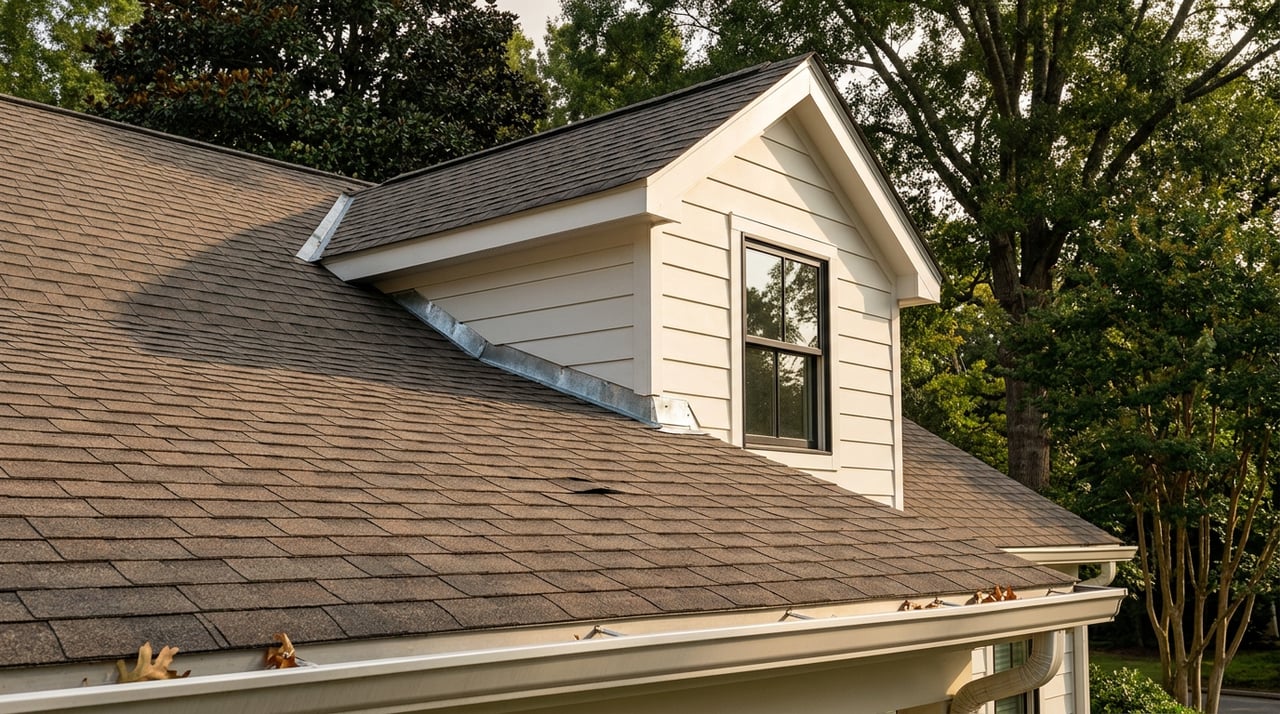
A second ring of development pushed into what's now 30044 and 30045, around the Gwinnett Place area and toward Sugarloaf Mills, through the 1990s and early 2000s. These homes generally skip the polybutylene problem but carry a different one: builders in this window used lower-grade architectural shingles, and a house built between 1995 and 2005 is very often due for a complete roof replacement now, not a patch. One local roofing contractor pointed to a 1992 colonial near the Gwinnett County Courthouse where the original flashing around the dormer windows had never been properly stepped into the brick, a shortcut common enough in that era that it had been patched by three different contractors before anyone traced it back to the source. The lesson isn't about that one house. It's that a roof inspection on a 1990s Lawrenceville home should specifically ask about original flashing detail, not just visible wear.
Newer construction along GA-316 and toward Dacula is generally sound on the roofing and plumbing fronts that trip up older sections of the city. The relevant due diligence question here shifts from material age to build speed and storm exposure, since this corridor has taken the brunt of Gwinnett's spring storm activity in recent years.
Ask any inspector working Lawrenceville's older, tree-canopied subdivisions about the one item buyers consistently skip, and the answer is the sewer line. Established neighborhoods with mature trees are prone to root intrusion, cracking, or partial collapse of underground sewer lines, damage that a standard visual inspection cannot catch because it's happening below grade. A camera sewer scope typically runs a few hundred dollars added to the inspection cost. Skipping it on an older Lawrenceville lot with established trees can mean discovering the problem only after closing, when excavation repairs commonly run $5,000 or more. For a house that falls into that 1980s ring near downtown or Scenic Highway, a sewer scope belongs on the checklist by default, not as an upsell.
One more piece changed this year. As of January 1, 2026, Georgia law under HB 618 requires sellers of one-to-four-family homes to provide written disclosure of known flood history. That's new ground in a state where general condition disclosure has always been customary rather than compelled. It doesn't override the caveat emptor framework or the due diligence period, but it does close one specific gap that buyers previously had to ask about directly. Buyers under contract now should confirm this disclosure is in the file, and if it isn't, ask why before the window closes rather than after.
If you've checked Lawrenceville's numbers on more than one site this year, you've probably noticed they don't agree. Trackers pulling from the same broad market reported median days on market anywhere from the mid-30s to nearly 90 days during overlapping stretches of 2026, depending on how each one defines and weights its sample. That spread isn't a data error. It's a reminder that a citywide median blends four zip codes and three build eras into one number, which is exactly why it can't tell you whether the specific house you're under contract on needs a sewer scope, a repipe quote, or neither. The median is a starting point for a conversation with your agent, not a substitute for one.
A due diligence period built around the actual house, rather than a generic Georgia checklist, tends to follow a pattern like this:
How long is due diligence in Georgia? It's negotiated, not fixed by statute. Most Lawrenceville contracts land somewhere between seven and fourteen days, counted from the Binding Agreement Date.
Do I need a sewer scope on every Lawrenceville home? Not every home, but any older property on a lot with mature trees is a reasonable candidate given how common root intrusion is in the city's established neighborhoods.
What happens if I find a problem after the window closes? Once due diligence expires, you're bound to the contract unless a remaining contingency, typically financing or appraisal, applies. This is why timing inspections for day one or two of the window matters more than people expect.
Does HB 618 replace the need for a flood check on my own? No. It adds a disclosure requirement on top of the existing framework. Confirming flood history independently through public flood maps is still worth doing during due diligence.
Every one of these decisions gets easier with someone in your corner who already knows which zip code carries which risk. That's the kind of groundwork The Merritt Realty Group puts in before a client ever signs a contract, whether you're structuring an offer around a due diligence period or figuring out what your own Lawrenceville home is worth before you list it. If that's the conversation you need next, reach out and Get Your Free Home Valuation.
Stay up to date on the latest real estate trends.
October 8, 2026
October 1, 2026
September 24, 2026
September 17, 2026
September 10, 2026
September 3, 2026
August 27, 2026
August 20, 2026
August 13, 2026
Our team combines expertise with a willingness to think outside the box and break the mold to stay on the cutting edge of a shifting real estate industry. Whether you're thinking about listing a house, beginning your search for a new home, or have a question about the area, please feel free to contact us.