In Monroe's Historic District, the Paint Is Free. The Windows Aren't.
September 24, 2026
September 24, 2026
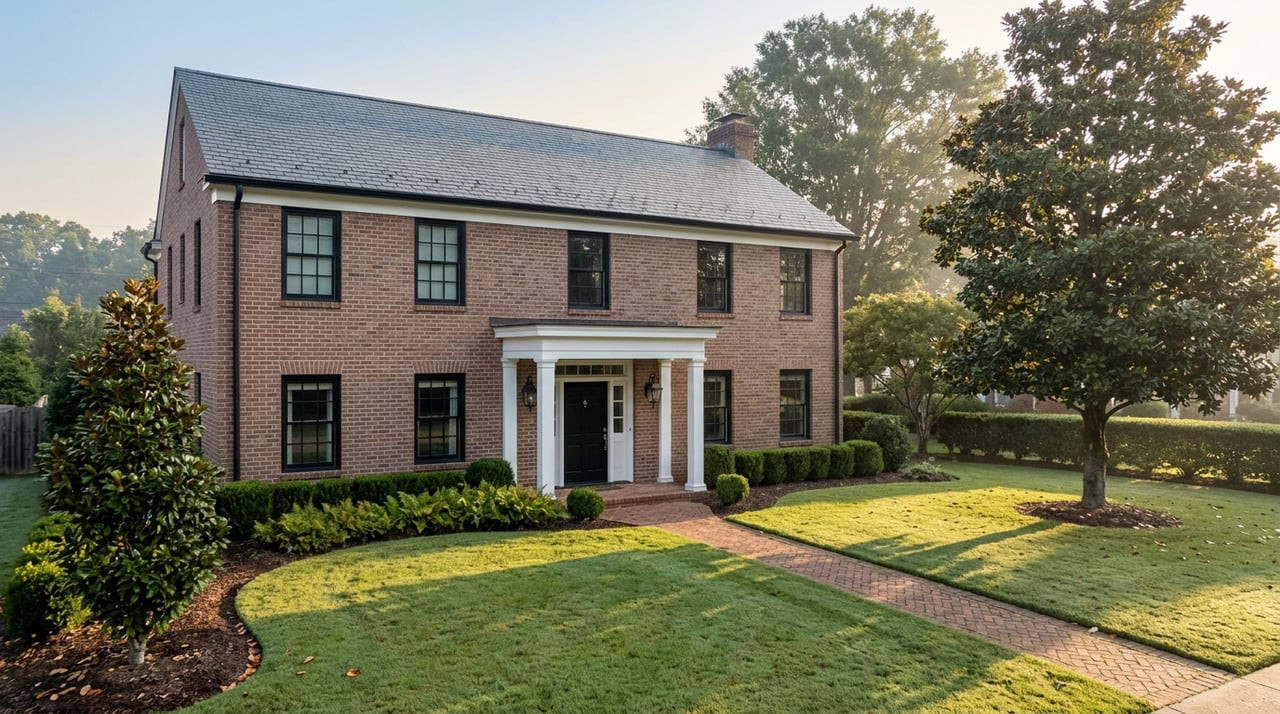
Stand on the porch of a 1920s bungalow near North Broad Street and it is easy to fall for the details. The original wavy glass in the windows. The wood siding that has weathered into something you cannot buy new. A buyer touring that house is usually thinking about what they will change once they own it. Fresh paint on the trim, maybe. New windows that seal better in the summer heat. A fence for the dog.
Here is the part that rarely comes up on the tour: one of those projects needs zero approval from the city. The other two need a hearing.
If you are looking at a home inside one of Monroe's historic districts, that asymmetry is the single most useful thing to understand before you write an offer, because it changes both your renovation budget and your timeline in ways a standard listing sheet will never flag.
Monroe's Historic Preservation Commission reviews construction activity across nine historic districts and eight individual historic sites in the city, a scope confirmed on the commission's own city page. That includes recognizable ground like the North Broad Street Historic District, the South Broad Street Historic District, the Monroe Commercial Historic District, and the Monroe and Walton Mills Historic District. The South Broad Street district alone covers 15 acres and 14 contributing buildings, anchored by homes like the Walker-Fields House and the Wright-Henson House, with the John Felker House standing as the oldest structure in the group.
If a property sits inside one of these boundaries, or within the city's Corridor Overlay near downtown, any material change to its exterior appearance needs a Certificate of Appropriateness before a building permit can even be issued. That sequencing matters. The COA is not paperwork you file alongside a renovation permit. It is the gate you have to clear before the permit process starts at all, according to Monroe's own building improvement guidelines.
Under Georgia's historic preservation rules, some things skip that gate entirely. Exterior paint is specifically excluded from Certificate of Appropriateness review under state law, and ordinary maintenance such as repairing a roof with matching materials does not trigger it either, according to the state's Local Historic Districts FAQ. What does require review: replacing windows or doors, installing artificial siding, enclosing a porch, adding a fence, or any demolition.
Here is how that splits out in practice for a typical historic-district home in Monroe:
| Project | Needs a COA? |
|---|---|
| Repainting the exterior | No |
| Repairing a roof with matching materials | No |
| Replacing windows or doors | Yes |
| Installing vinyl or artificial siding | Yes |
| Enclosing a porch | Yes |
| Adding a fence | Yes |
| Partial or full demolition | Yes |
Most buyers assume it works the other way around. Paint feels like the visible, character-defining choice, the thing a preservation board would care most about. Windows feel like a maintenance item, something you swap out the way you would a water heater.
The state's logic runs the opposite direction. Paint color can change again next year with no lasting effect on the historic fabric of the building. A window opening, once altered, changes the proportions of the facade for good. That is why the rule protects the harder-to-reverse work and leaves the easily-reversible work alone.
For a buyer, the practical effect is that the renovation items with the biggest visible payoff, like swapping drafty original windows for something more efficient, are exactly the ones that need a hearing first. And that hearing runs on its own calendar. Monroe's Historic Preservation Commission meets once a month, on the fourth Tuesday at 6 p.m. in the Municipal Auditorium inside City Hall at 215 North Broad Street. There is no rolling, business-day review the way there is for a standard building permit. Miss the cutoff to get on that month's agenda and the next opportunity is a full month out, not a matter of days.
If you are closing on a historic-district home in October with plans to replace the windows before winter, that monthly cadence is worth building into your timeline before you sign anything, not after.
This is not a quiet corner of town where the rules rarely get tested. Downtown Monroe was named Georgia Main Street's June 2026 Downtown of the Month, with the announcement crediting a downtown that continues to honor its past while building an exciting future. The numbers behind that recognition are real: in 2025, downtown Monroe drew 377,294 attendees across 54 promotional events, logged 1,273 volunteer hours, and saw more than $17 million in combined public and private investment, according to Georgia Main Street's announcement.
You can see what that investment looks like on the ground. The J. L. McGarity Ford Building, a 1921 auto dealership on the block, was rehabilitated into a brewery and restaurant and picked up a 2026 Excellence in Rehabilitation Award for the transformation, a project covered by Georgia Main Street's statewide news.
That project matters for a buyer weighing a home nearby, not because it is a comparable sale, but because it shows what happens when someone works through the Certificate of Appropriateness process rather than around it. The building kept its exterior character while gaining new commercial life. It is the version of the rule working as designed. The flip side is that as more of downtown fills in this way, the historic-district homes ringing that commercial core are getting more buyer attention, and more of those buyers are running into the COA requirement for the first time without expecting it.
Historic-district marketing loves to mention tax credits, and there is a real one on the table in Monroe. The trouble is that the credit most often cited is the wrong one for most buyers.
The federal Rehabilitation Investment Tax Credit offers 20 percent back on qualified rehabilitation expenses, but it applies only to income-producing property, according to Monroe's downtown development page. If you are buying the house to live in it, that credit does not apply to you at all.
The credit that actually helps an owner-occupant is Georgia's state income tax credit for rehabilitated historic property, worth 25 percent of qualifying rehabilitation expenses, capped at $100,000 for a personal residence. Properties that go through a substantial, qualifying rehabilitation can also see their county property tax assessment frozen for more than eight years, which is arguably the more durable benefit of the two for someone planning to stay put.
Knowing which credit actually applies before you budget a renovation is the difference between a plan that pencils out and one that comes up 20 points short when tax season arrives.
If you are looking at homes in Monroe right now and a listing sits near downtown or has the word historic anywhere in its description, ask a direct question before you get attached to a renovation plan: is this specific address inside one of the four listed historic districts, or the Corridor Overlay, and if so, what has the Historic Preservation Commission approved for similar houses nearby. That single question tells you more about your real timeline and budget than square footage or the listing photos ever will.
Does painting my house in a historic district need approval first? No. Exterior paint color is specifically excluded from Certificate of Appropriateness review under Georgia's preservation law.
Can I use the 20 percent federal tax credit on my personal home in Monroe's historic district? Not if you are living in it. That federal credit is limited to income-producing property. The 25 percent Georgia state credit, capped at $100,000, is the one built for personal residences.
What happens if I replace windows or add a fence before getting a COA? Work completed without an approved Certificate of Appropriateness can lead to fines, permit delays, and in some cases a requirement to reverse the change, per the state's own preservation guidance.
How often does Monroe's Historic Preservation Commission meet? Once a month, on the fourth Tuesday at 6 p.m., in the Municipal Auditorium inside Monroe City Hall.
Old houses in Monroe carry real character and real rules, and the two are connected on purpose. If you are weighing a historic-district property, whether you are buying your first old house on North Broad or getting ready to list one near downtown, The Merritt Realty Group can walk the district boundaries and the approval history with you before you write an offer or set a listing price. Get Your Free Home Valuation and let's talk through what your specific address actually allows.
Stay up to date on the latest real estate trends.
September 24, 2026
September 17, 2026
September 10, 2026

September 3, 2026
August 27, 2026

August 20, 2026
August 13, 2026
August 13, 2026
August 6, 2026
Our team combines expertise with a willingness to think outside the box and break the mold to stay on the cutting edge of a shifting real estate industry. Whether you're thinking about listing a house, beginning your search for a new home, or have a question about the area, please feel free to contact us.